
Goals:
1. Understand and take ownership in my Christian faith.
2. To live faith as a child and servant of God.
3. Grow in the life and mission of the church.
Bible Unit: Lessons
To approach scripture with a set of principles that will better enable us to experience a relationship of Jesus Christ.
 Unit Bible Basics (Introduction): With the help of the Holy Spirit, students will approach scripture with a set of principles that will better enable them to experience a relationship of Jesus Christ. Given Scripture references, The Lutheran Study Bible, Small Catechism, and class discussion, students will discover uses for the tools found in the books and know the landscape of The Lutheran Study Bible by identifying the various parts of the book.
 Unit Bible Basics (Principles): With the help of the Holy Spirit, students will approach scripture with a set of principles that will better enable them to experience a relationship of Jesus Christ. With The Lutheran Study Bible, Small Catechism, and class discussion, students will know the purpose of the Bible; demonstrate how to find Scripture passages and articles using the concordance; Come to understand the Lutheran understanding of Law and Gospel.
 Bible Basics (Follow Through), In this lesson students will explore how to read Scripture faithfully with the help of the Holy Spirit. Using The Lutheran Study Bible, the Small Catechism, and class discussion, they will learn key principles of interpretation and define important terms such as Inspiration, Inerrancy, and Unity of Scripture.
 Unit Bible Basics (Catechism) We are unlocking the secrets and discovering the tools in the book; Luther's Small Catechism with Explanations. Students will know common terms used to describe parts of the Catechism; identify the foundation of faith as Christ Jesus; know the parts of the Catechism through demonstration.
Unit Bible Basics (Context) We are learning a contextual approach to interpreting Scripture. We are demonstrating familiarity of several features of The Lutheran Study Bible and applying Hermeneutical principle of context by uncover the meaning of a given text.
Unit Bible Basics (Review) Scripture alone is our source of religious truth. Skill in using the Lutheran Study Bible, with its concordance, notes, articles, and footnotes can be helpful to the Christian in the lifelong study God’s Word. We have identified a set of principles to approach Scripture so that we may avoid common errors. We have also identify the role of Creeds, including the Small Catechism, within the church.
Memory Work: Bible Unit
Introduction Quiz
Cumulation of Quizes
The purpose of this quiz is to give you practice using The Lutheran Study Bible, Luther's Small Catechism with explanation, and the notes you took.
Introduction Quiz
Score Card
Right Answers :
Wrong Answers :
Grade : %Introduction Quiz
Score Card
Right Answers :
Wrong Answers :
Cumulative Grade : %Introduction
ReviewScore : %
Question : / 10
Quiz :
Bank Size :
The Attached Diagram

Promises Unit: Lessons
To understand that the promises made by God are fulfilled in Christ Jesus.
 Unit Promises (Genesis) With the help of the Holy Spirit, students can come to understand that the promises made by God are fulfilled in Christ Jesus. Given Scripture references The Lutheran Study Bible, Small Catechism, and class discussion, students will know the story of the fall; describe the consequences of original sin; name the promise give to us through Adam and Eve; and explain the cost of sin and the hope given with the expulsion from Eden.
 Unit Promises (Noah) An examination of the promise and covenant given to Noah and the fulfillment of that promise in the work of Christ. With the help of the Holy Spirit, students can come to understand that the promises made by God are fulfilled in Christ Jesus. Given Scripture references The Lutheran Study Bible, Small Catechism, and class discussion, students will know the promise given to Noah and the fulfillment in Christ; compare the covenant given to Noah to the work of Christ and connect baptism with the flood waters using Scripture.
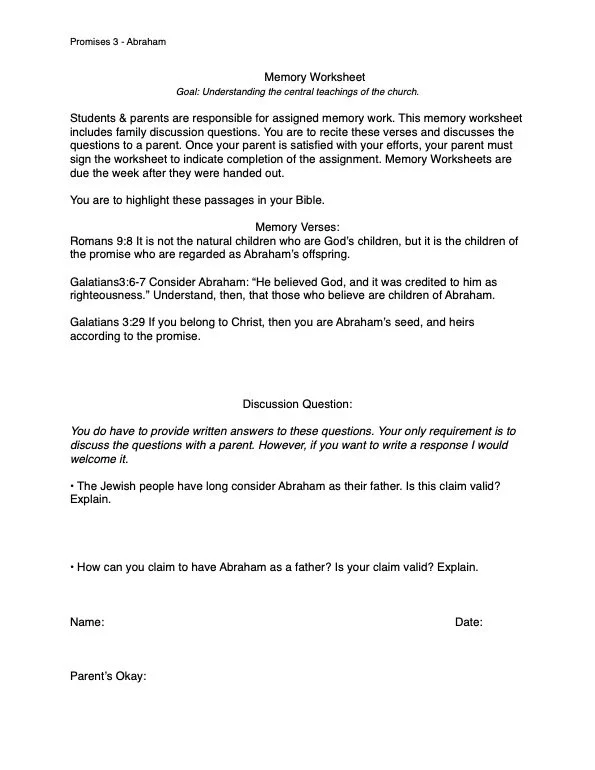 Unit Promises (Abraham) A look into the four part promise given to Abraham and Sarah. With the help of the Holy Spirit, students can come to understand that the promises made by God are fulfilled in Christ Jesus. Given Scripture references The Lutheran Study Bible, Small Catechism, and class discussion, students will appraise how they are connected to the covenant given to Abraham and Sarah and identify the four points of that covenant; Explain with scripture references on how the covenant is fulfilled in Christ Jesus.
 Unit Promises (Moses) God promised that he would take us to be His people. With the help of the Holy Spirit, students can come to understand that the promises made by God are fulfilled in Christ Jesus. Given Scripture references The Lutheran Study Bible, Small Catechism, and class discussion, students will compare and contrast the priestly role of Moses and that of Christ; explain how Jesus fulfills the terms of the covenant given on Mt Sinai; know that the promise given to Moses was that we would be God's people.
 Unit Promises (David) Your offspring …establish his kingdom …establish his throne …forever. With the help of the Holy Spirit, students can come to understand that the promises made by God are fulfilled in Christ Jesus. Given Scripture references The Lutheran Study Bible, Small Catechism, and class discussion, students will relate the promises given to David and Abraham to their fulfillment in Christ; Compare and contrast Saul & David’s walk of faith; know and identify Samuel, Saul, and David.
 Unit Promises (Jesus) Jesus is the fulfillment of the promises made by God. With the help of the Holy Spirit, students can come to understand that the promises made by God are fulfilled in Christ Jesus. Given Scripture references The Lutheran Study Bible, Small Catechism, and class discussion, students will identify the reasons why Christ is true man and true God; defend that faith in Jesus Christ is the only path to God.
.
Unit Promises (Review) We have examined the promise of a coming savior first given to Adam and Eve. The promises given to Noah, Abraham & Sarah, Moses, David, and the fulfillment of those promises in Christ Jesus. The challenge this week is recalling the lessons and promises in contest of skill and knowledge.
Memory Work: Promises Unit
Promises 1- Genesis
Promises 2 - Noah
Promises 3 - Abraham
Promises 4 - Moses
Promises 5 - David
Promises 6 - Jesus
Promises Unit Quiz
Promises Quiz
Score Card
Right Answers :
Wrong Answers :
Grade : %
Promises Quiz
Score Card
Cumulation of Quizes
Right Answers :
Wrong Answers :
Cumulative Grade : %
Promises
Review
Score : %
Question : / 10
Quiz :
Bank Size :
Ten Commandments Unit: Lessons
To understand the purpose of God's Law in our lives.
 Unit Ten Commandments (Law and Gospel) Lutheran’s make a sharp distinction between Law and Gospel. With the help of the Holy Spirit, students can come to understand the purpose of God's Law in their lives. Given Scripture references The Lutheran Study Bible, Small Catechism, and class discussion, students will justify the description of a jealous; define sin; know the three purpose of the Law.
 Unit Ten Commandments (The First Table) There are two dimensions with our relationship with the Law of God. Our relationship with God and our relationship with one another. With the help of the Holy Spirit, students can come to understand the purpose of God's Law in their lives. Given Scripture references The Lutheran Study Bible, Small Catechism, and class discussion, students will defend why God want us to keep His commandments perfectly; Explain the 1st Commandment; Know the commandments 1-3.
Unit Ten Commandments (The First Table continue) There is only one God whose name we keep Holy and whose word we gladly hear. With the help of the Holy Spirit, students can come to understand the purpose of God's Law in their lives. Given Scripture references The Lutheran Study Bible, Small Catechism, and class discussion, students will compare and contrast the 1st Table of "Ethical Monotheism" to the Lutheran Understanding; explain the significance's of the 1st Table of the Law and the 2nd Table of the Law.
Unit Ten Commandments (4th Commandment): Honor those in authority. Given Scripture references, The Lutheran Study Bible, Small Catechism, and class discussion, students will compare and contrast “Ethical Monotheism” with the Christian perspective of honoring our parents; identify where Jesus summarized the 1st and 2nd Tables of the ten commandments.
 Unit Ten Commandments (5th Commandment): We are to help and support each other. With the help of the Holy Spirit, students can come to understand the purpose of God's Law in their lives. Given Scripture references, The Lutheran Study Bible, Small Catechism, and class discussion, students will define God’s definition of murder; identify the historic Christian position concerning war (Just War); compare and contrast the Ethical Monotheism understanding with our Christian understanding; and come to understand Christianity's impact upon the world as Christians lived out this commandment.
 Unit Ten Commandments (6th Commandment): Remain faithful. With the help of the Holy Spirit, students can come to understand the purpose of God's Law in their lives. Given Scripture references, The Lutheran Study Bible, Small Catechism, and class discussion, students will compare and contrast the Ethical Monotheism understanding with the Christian understanding; define the goal of relationships; diagram the signs of an abusive relationship; outline the cycle of relationships.
 Unit Ten Commandments (7th & 8th Commandments): Be honest and speak well of your neighbor. With the help of the Holy Spirit, students can come to understand the purpose of God's Law in their lives. Given Scripture references, The Lutheran Study Bible, Small Catechism, and class discussion, students will know the 3 issues involved in Stewardship; identify dishonest ways of getting things; recommend what these commandments encourage us to do; define the difference between lying in general and being a false witness.
.
 Unit Ten Commandments (9th & 10th Commandments): Be appreciative and gain perspective of what you have and your blessings. With the help of the Holy Spirit, students can come to understand the purpose of God's Law in their lives. Given Scripture references, The Lutheran Study Bible, Small Catechism, and class discussion, students will know the difference between covet and envy; provide a defense as to why the there are two coveting commandments; express what God particularly impressing upon us in the last two commandments.
Unit Ten Commandments (Review): A review of what we have covered and what we remember. With the help of the Holy Spirit, students can come to understand the purpose of God's Law in their lives. Students will recite the 10 Commandments with explanation; Evaluate Ethical Monotheism's understanding against the Christian understanding; Express the purpose, application, and function of Law and Gospel.

Ten Commandments Unit Quiz
Ten Commandments Quiz
Score Card
Right Answers :
Wrong Answers :
Grade : %
Ten Commandments Quiz
Score Card
Cumulation of Quizes
Right Answers :
Wrong Answers :
Cumulative Grade : %
Ten Commandments
Review
Score : %
Question : / 10
Quiz :
Bank Size :
Creeds Unit Lesson Goals
To understand the importance of creeds and how they are utilized.
Unit Creed (Introduction): With the help of the Holy Spirit, students will understand the importance of creeds and how they are utilized. Given Scripture references, The Lutheran Study Bible, Small Catechism, and class discussion, students will recognize Scripture as the source of creedal authority; explain the functions of creeds; list the three ecumenical creeds and demonstrate where to find the creeds of the Lutheran church.
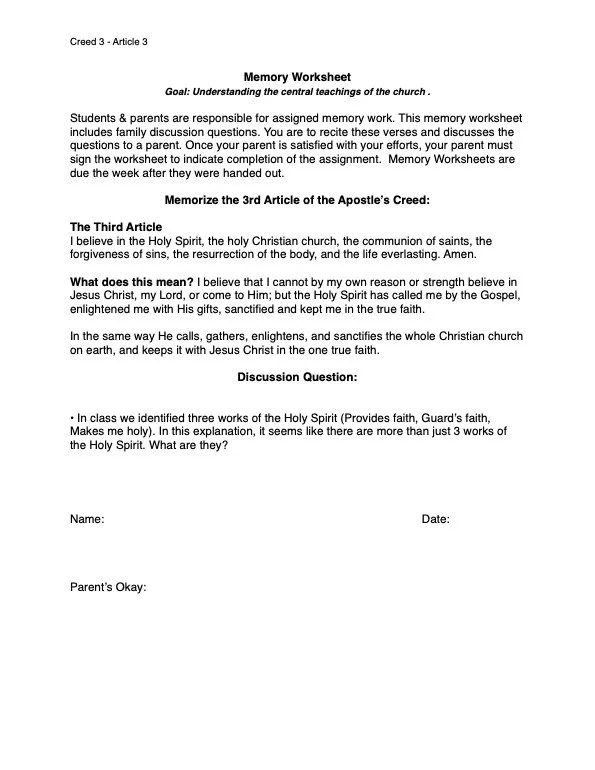 As the 3rd Person of the Holy Trinity, the Holy Sprit works through the Means of Grace to connect us to the work of Christ; to declare us righteous; to makes us holy.
Unit Creed (Holy Spirit): With the help of the Holy Spirit, students will understand the importance of creeds and how they are utilized. Given Scripture references, The Lutheran Study Bible, Small Catechism, and class discussion, students will define the role of the Holy Spirit in faith formation and know that the Holy Spirit works through the means of Grace.
As the 3rd Person of the Holy Trinity, the Holy Sprit works through the Means of Grace to connect us to the work of Christ; to declare us righteous; to makes us holy.
Unit Creed (Holy Spirit): With the help of the Holy Spirit, students will understand the importance of creeds and how they are utilized. Given Scripture references, The Lutheran Study Bible, Small Catechism, and class discussion, students will know the meaning of the terms Justification and Sanctification; know the four uses of the Word of God; describe the works of the Holy Spirit.
 As the 1st Person of the Holy Trinity, God the Father is the Father of all creation including us. There is only one human race who are descendants of Adam and Eve and who is redeemed by Christ. God is our Father through faith in Christ.
Unit Creed (1st Article): With the help of the Holy Spirit, students will understand the importance of creeds and how they are utilized. Given Scripture references, The Lutheran Study Bible, Small Catechism, and class discussion, students will identify the role of God the Father; discern language that worships creation rather than the creator; and describe the works of God the Father.
 This week we are examining the dual nature of Christ to better understand how Christ is the fulfillment of the Promises made by God.
Unit Creed ( Who is Jesus): With the help of the Holy Spirit, students will understand the importance of creeds and how they are utilized. Given Scripture references, The Lutheran Study Bible, Small Catechism, and class discussion, students will know the dual nature of Christ; defend the reasons why the Christ is true man (100%) and true God (100%); and explain how Christ is the fulfillment of the Promises made by God.
The functions of creeds are to 1) used as a teaching device, 2) they highlights what is central in Scripture, 3) provide a common identity seeking to include all 4) Attacks false teaching.
Unit Creed (Review): A review of what we have covered and what we remember. With the help of the Holy Spirit, students will understand the importance of creeds and how they are utilized. Students will identify the role of God the Father, the role of God the Son and His nature, and the role of God the Holy Spirit.
Creed Unit Quiz
Creed Quiz
Score Card
Right Answers :
Wrong Answers :
Grade : %
Creed Quiz
Score Card
Cumulation of Quizes
Right Answers :
Wrong Answers :
Cumulative Grade : %
Creed
Review
Score : %
Question : / 10
Quiz :
Bank Size :
Prayer Unit Lesson Goals
To understand the desire of God for heart felt communication through prayer.
(Note: there are two tracks in the Prayer Unit.)
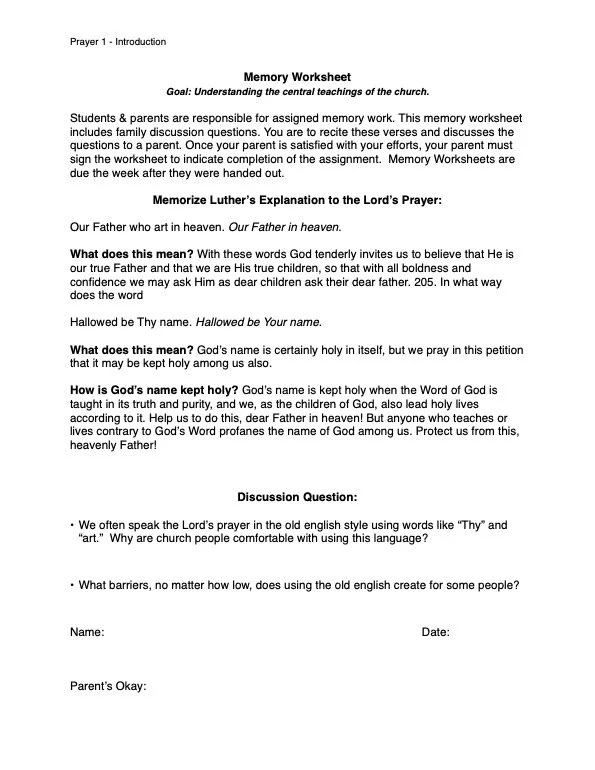 This week we turn our attention to the Lord’s Prayer and God’s desire for heart felt communication from us in our ongoing relationship with Him.
Unit Prayer (Introduction) "Our Father who is in heaven" Given Scripture references The Lutheran Study Bible, Small Catechism, and class discussion, students will know that prayer is talking to God in an ongoing relationship, recall the three reasons we pray, contrast our understanding of prayer to worldly false teachings by identifying the four disclosures of "Our Father in heaven" that enforces our position.
Goal: With the help of the Holy Spirit, students can come to understand the desire of God for heart felt communication through prayer.
Objective: Given Scripture references The Lutheran Study Bible, Small Catechism, and class discussion, students will explain what we are asking from a Holy God that His name be kept holy.
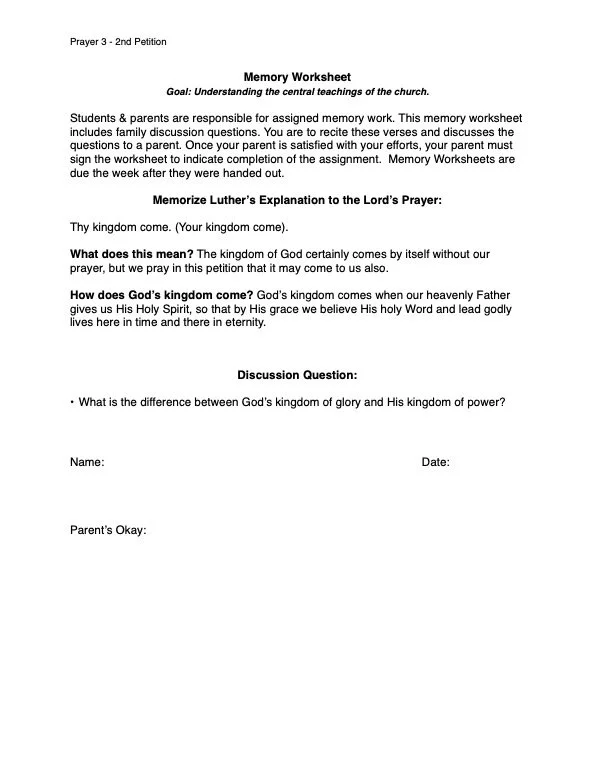
 Unit Prayer (2nd & 3rd Petitions) "Your kingdom come. Your will be done on earth as in heaven" With the help of the Holy Spirit, students can come to understand the desire of God for heart felt communication through prayer. Given Scripture references The Lutheran Study Bible, Small Catechism, and class discussion, students will, through the 2nd Petition, identify the 3 kingdoms of God and explain what we are asking through this petition, "Your Kingdom Come". Through the 3rd Petition, students will name the four parts to the Good and Gracious will of God and identify the differences between the Scriptural definition of the Will of God to descriptions used in our culture.
 Unit Prayer (4th & 5th Petitions) "Give us this day our daily bread. Forgive us our sins as we forgive those who sin against us." With the help of the Holy Spirit, students can come to understand the desire of God for heart felt communication through prayer. Given Scripture references The Lutheran Study Bible, Small Catechism, and class discussion, students will, identify the reasons why we ask God for our daily bread; Define the meaning of "daily bread" in both the narrow and broad sense; Explain why we pray "daily" and "this day" in this petition; justify why we are saved by Grace alone through Faith alone when we ask for forgiveness as we forgive others; Explain the Lutheran understanding of effects from original sin.
 Unit Prayer (6th & 7th Petition) "And lead us not into temptation. But deliver us from evil." With the help of the Holy Spirit, students can come to understand the desire of God for heart felt communication through prayer. Given Scripture references The Lutheran Study Bible, Small Catechism, and class discussion, students will, justify our perspective that God tempts no one and identify the three sources of temptation; recognize that we are basically evil (original sin); explain that evil is the corruption of good; list sources of evil.
 Unit Prayer (Conclusion) “For Yours is the kingdom, the power, and the glory forever and ever.” With the help of the Holy Spirit, students can come to understand the desire of God for heart felt communication through prayer. Given Scripture references The Lutheran Study Bible, Small Catechism, and class discussion, students will Compare and contrast difference between coveting and envy.
Memory Work: Prayer Unit
Prayer 1 - Introduction
Prayer 3 - 2nd Petition
Prayer 3f - 2nd & 3rd Petition

Prayer 4 - 3rd Petition
Prayer 4f - 4th & 5th Petition

Prayer 5 - 4th Petition
Prayer 5f - 6th & 7th Petition

Prayer 6 - 5th Petition

Prayer 7 - 6th Petition

Prayer 8 - 7th Petition
Prayer 9 - Conclusion
The Lord's Prayer Unit Quiz
Prayer Quiz
Score Card
Right Answers :
Wrong Answers :
Grade : %
Prayer Quiz
Score Card
Cumulation of Quizes
Right Answers :
Wrong Answers :
Cumulative Grade : %
Prayer
Review
Score : %
Question : / 10
Quiz :
Bank Size :
Sacraments Unit Lesson Goals
To appreciate the benefits, the mystery, and the Lutheran understanding.
 Unit Sacraments (Baptism) Baptism is one of the means through which the Holy Spirit works to connect us with the work of Christ. With the help of the Holy Spirit, students will come to appreciate the benefits, the mystery, and the Lutheran understanding of the sacraments. Given Scripture references The Lutheran Study Bible, Small Catechism, and class discussion, students will identify the visible element of Baptism; explain the meaning of "one baptism for the remission of sins.”; come to view baptism as part of the Gospel; and define the biblical definition of Baptism.
Unit Sacraments (Baptism 2) Baptism is a work of God for the forgiveness of sins. With the help of the Holy Spirit, students will come to appreciate the benefits, the mystery, and the Lutheran understanding of the sacraments. Given Scripture references The Lutheran Study Bible, Small Catechism, and class discussion, students will know the reasons for baptizing babies; justify the position that Baptism is a work performed by God not by man; provide scriptural evidence to questions regarding Baptism; and conclude that salvation is by faith alone through grace alone.
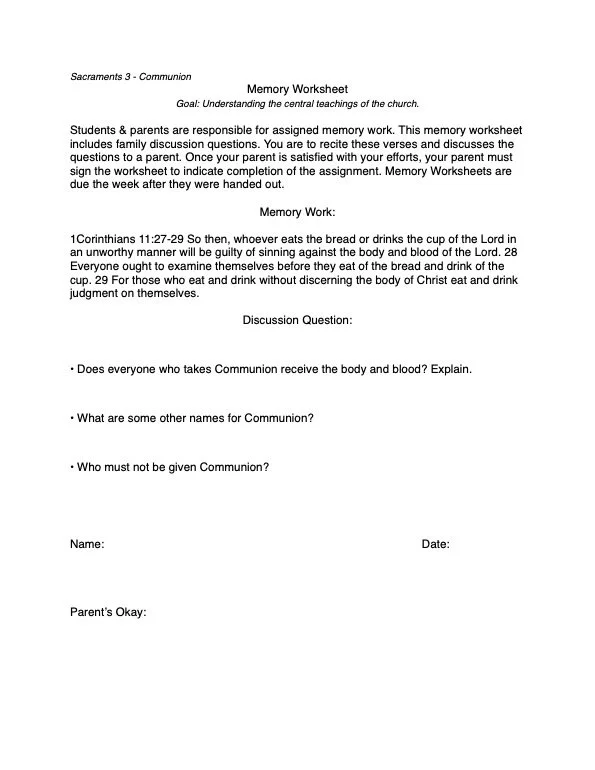 Unit Sacraments (Communion) On the night he was betrayed, Jesus established the Lord's Supper – a means of Grace through the Holy Spirit works. With the help of the Holy Spirit, students will come to appreciate the benefits, the mystery, and the Lutheran understanding of the sacraments. Given Scripture references The Lutheran Study Bible, Small Catechism, and class discussion, students will explain the local practice for receiving the sacrament; Identify the benefits of Holy Communion; know the significance of the two dimensions of Communion; Compare and contrast our understanding of Holy Communion with other Christian groups.
Unit Sacraments (Office and Liturgy) The Office of the Keys is that special authority which Christ has given to His church on earth to forgive sins. With the help of the Holy Spirit, students will come to appreciate the benefits, the mystery, and the Lutheran understanding of the sacraments. Given Scripture references The Lutheran Study Bible, Small Catechism, and class discussion, students will identify the scriptural support for the teachings of the office of the keys; distinguish the differences between the LCMS's understanding of the Office of the Keys and WELS; explain the relationship of the congregation and its Called church workers.
Unit Sacraments (Worship) Worship is one of the key elements in a Christian’s life. With the help of the Holy Spirit, students will come to appreciate the benefits, the mystery, and the Lutheran understanding of the sacraments. Given Scripture references The Lutheran Study Bible, Small Catechism, and class discussion, students will explain the Law of Worship, Law of Belief; identify the role of the Liturgy in worship and name its parts; explain in their own words two dimensions to worship; justify the rhythm of worship.
Sacraments Unit Quiz
Sacraments Quiz
Score Card
Right Answers :
Wrong Answers :
Grade : %
Sacraments Quiz
Score Card
Cumulation of Quizes
Right Answers :
Wrong Answers :
Cumulative Grade : %
Sacraments
Review
Score : %
Question : / 5
Quiz :
Bank Size :
Office of the Keys Unit Quiz
Keys Quiz
Score Card
Right Answers :
Wrong Answers :
Grade : %
Keys Quiz
Score Card
Cumulation of Quizes
Right Answers :
Wrong Answers :
Cumulative Grade : %
Keys
Review