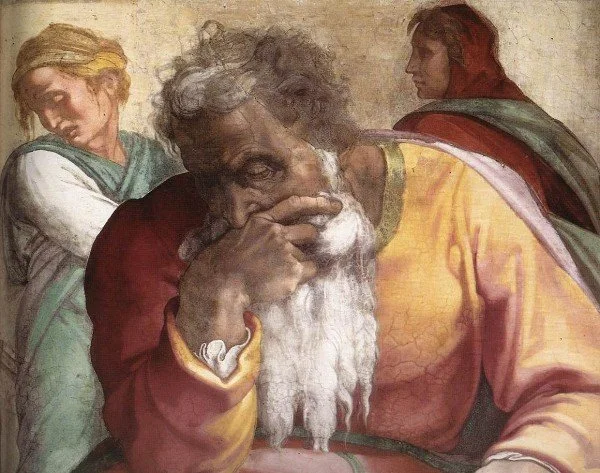
Jeremiah
Key Learnings from Sunday School
April 2016 - May 2017
Jeremiah Introduction
⁃ Jeremiah was only a young man when God's call came to him. Some scholars think he may have been in his early teens!
⁃ Jeremiah preached to the Southern Kingdom (Judah) during the reign of its final five kings-Josiah, Jehoahaz, Jehoiakim, Jehoiachin. and Zedekiah (627-586 BC).
⁃ The Lord forbade Jeremiah to marry. He had neither wife nor children to give him support. Nor was he allowed to attend funerals - parties. His lifestyle became one long object lesson pointing to the judgment about to overtake Judah.
⁃ Jeremiah was both a priest and a prophet. He was among the most unpopular prophets. At one point, people from his hometown, Anathoth, plotted to assassinate him (Jeremiah 11: 18-23).
⁃ The name Jeremiah means "the Lord will raise up" or "the Lord will set free." Jeremiah's name reflects the promise of his book. Sin had brought Judah very low, but God would raise up His repentant, faithful people.
⁃ Jeremiah is often called "the weeping prophet" because of the sad message of judgment he delivered and because so few believed him-or even listened to him.
⁃ The book includes both history and poetry. Much of the book express sorrow or lament over the sins of Israel.
⁃ It’s all about faith in God
• Jeremiah was both a priest and a prophet. He was among the most unpopular prophets. He preached to the Southern Kingdom (Judah) during the reign of its final five kings. Note: Don’t be confused with his geographical origin and his tribe.
• There are two visions found in the chapter, one speaks of surety and certainty of God’s Word and the other conveys how messy things are going to get.
• God makes a twofold promise with Jeremiah at the end of the chapter.
⁃ It’s all about faith in God
• Jeremiah was both a priest and a prophet. He was among the most unpopular prophets. He preached to the Southern Kingdom (Judah) during the reign of its final five kings. Note: Don’t be confused with his geographical origin and his tribe.
• There are two visions found in the chapter, one speaks of surety and certainty of God’s Word and the other conveys how messy things are going to get.
• God makes a twofold promise with Jeremiah at the end of the chapter.
⁃ Guilty of faithlessness
These charges are given to support the verdict of faithlessness
1. You chose death (Deserts or oasis)
2. You have not trusted God (Fountain or broken cisterns)
3. You have looked to false gods (Nile & Euphrates)
4. You whored yourself out to other gods (Animals in heat sniffing the wind)
5. You have worshipped creation not the creator (Trees & stones)
6. You have killed the people sent to warn you (Swords and lions)
7. You have not acted as the children of God (blood on your hands)
⁃ Jezebelalian - Lack of faith in God. Manipulating people.
Terms:
1. Repentance - to turn away
2. Cheap Grace - grace we give ourselves
3. Fallow ground - uncultivated, unplowed, untilled, unplanted, unsown; unused, dormant, resting, empty, bare
4. Circumcised - cut off the foreskin - a reminder of the covenant God made with Abraham
5. Sackcloth: cloth used by mourners
6. Standard: flag, banner, pennant, ensign, color(s).
7. Will of God: Name kept holy; word taught correctly; sinners brought to faith; living godly lives
8. Jezebel: unbelief, deception, and manipulation
⁃ Corrupted, debauchery, and rebellious
Terms:
1. Sodom & Gomorrah: cities destroyed in Genesis because of the debauchery that comes with faithlessness.
2. Remnant: a small remaining quantity of something
3. Davidic covenant (2Samuel 7): An everlasting kingdom and a descendent of David sit upon that throne.
- We should fear and love God so that we do not despise preaching and His Word, but hold it sacred and gladly hear and learn it.
- We are a bunch of backsliders
Terms:
1. Lament - a passionate expression of grief or sorrow • a song, piece of music, or poem expressing sorrow. • an expression of regret or disappointment; a complaint
2. Dirge - a lament for the dead, especially one forming part of a funeral rite. • a mournful song, piece of music, or poem
3. Soli Deo gloria - Glory to God alone
4. Circumcised merely in the flesh
- Polytheism ≠ worship of the True God
Terms:
1. Covenant - A formal agreement or contract
2. Stoicism - 1) the endurance of pain or hardship without a display of feelings and without complaint. 2) an ancient Greek school of philosophy founded at Athens by Zeno of Citium. The school taught that virtue, the highest good, is based on knowledge, and that the wise live in harmony with the divine Reason (also identified with Fate and Providence) that governs nature, and are indifferent to the vicissitudes of fortune and to pleasure and pain.
3. Purpose of the Law - Curb, Mirror, Guide
4. Purpose of the Gospel - Salvation
- Covenant and Conspiracy; We are in open rebellion
Terms:
1. Cisterns - holds water for future use
2. Iniquities - immoral or grossly unfair behavior
3. Zion - the place where God resides with His people
4. Winnow - a method for separating chaff from grain by blow a current of air
5. Moses & Samuel - Law giver & anointed of kings
6. Manasseh son of Hezekiah - the most wicked king in Judah’s long history. His sins were a primary cause of Judah’s eventual destruction.
Jeremiah 14-15
- Droughts - sin has consequences
- The culture is the city dump.
Terms:
1. Pashhur the priest, the son of Immer - embodies institutional resistance to God’s word
2. Benjamin Gate - a place of judgement and authority;
⁃ The world hates the truth.
⁃ Place faith & trust in God alone because:
⁃ Besiegement by Jezebelarians
⁃ Polytheism has consequences
⁃ Sword, famine, and plague
Term:
1. King Nebuchadnezzar - Sword = external military threat, especially Babylon
2. The Chaldeans - Babylonians
3. Pestilence = internal decay and invisible death
4. Famine = economic and agricultural breakdown
⁃ God is not a vending machine
Terms:
1. The Davidic Covenant - Everlasting Kingdom
2. King Zedekiah - The last king of Judah - eyes put out
3. King Jehoiakim - Vassal king of Babylon; rejecting God’s word brings severe consequences
4. King Jehoahaz aka Shallum
5. Jeconiah aka Jehoiachin aka Coniah - King for 3 months
⁃ King Jehoiakim’s Curse - End of the Davidic line of kings
Terms:
1. Role of Prophet - Speaks the Word of God as God has directed
2. Role of Priest - A mediator between us and God
3. Sodom and Gomorrah - the gold standard of God’s sudden, total, and final judgment on unrepentant sin.
4. Adulterer - Idolatry = cheating on God
⁃ A Promised remembered
Terms:
• Figs - restoration or ruin
• Sabbath - willingness to obey
⁃ Good and Bad Figs: Giving our best to other gods.
Terms:
1. Shiloh - the ark of the covenant was enshrined for a time later when it was degraded to a good-luck charm, it was captured by the Philistines.
2. Ahikam the son of Shaphan - the scribe, pleaded that Jeremiah should not be put to death for his warnings of impending doom
3. Uriah the son of Shemaiah - A prophet who predicted the destruction of Judah
4. Elnathan son of Achbor - He was one of those who urged King Jehoiakim not to burn the roll that Jeremiah had written
5. Micah of Moresheth - predicted that glory would return to Zion through the coming of the Messiah.
6. King Hezekiah - Instead of trusting in God’s promise he formed a military alliance against the Assyrian powers
⁃ The King’s New Cloths
⁃ Hananiah the son of Azzur - directly opposed Jeremiah and claimed to speak for the Lord against Jeremiah’s message
⁃ Contradict - they can’t all be right.
Terms:
1. Elasah the son of Shaphan - delivers a letter from Jeremiah to the exiles on the first wave
2. Gemariah the son of Hilkiah - delivers a letter from Jeremiah to the exiles on the first wave
3. Ahab the son of Kolaiah - false prophet
4. Zedekiah the son of Maaseiah - Last King, Eyes poked out
5. Hananiah the son of Azzur - false prophet
6. Shemaiah of Nehelam - false prophet
Jeremiah 29
⁃ Teeth in the prophesy
Terms:
Jacob - The whole of the people of Israel
⁃ ROFL = self-reliance
⁃ Marks of a Cult
• + Adding to or changing the Word of God
• - Subtract from the Trinity of God
• * Multiplies the works needed for salvation
• / Divide the loyalties of the followers from God to loyalty to the Origination or leader.
⁃ A pledge of redemption
Terms:
• Abrahamic Covenant - Name, Nation, Blessing, Home
• The Priesthood in the order of Melchizedek - emphasizes permanence, righteousness, and direct access to God, rather than hereditary office or repeated temple sacrifices.
• Threefold office of Christ - Prophet, Priest, King
Jeremiah 33
- God remembers his promises
⁃ Our sin corrupts relationships
Terms:
• Jehoiakim’s Curse - End of the Davidic line of kings
• Jonadab the son of Rechab - used as an example of faithfulness as a contrast to Judah’s faithlessness
• Rechabites - no wine; only nomads
• Jaazaniah the son of Jeremiah, son of Habazziniah - prominent leader of the Rechabites
• Hanan the son of Igdaliah - “a man of God”
⁃ Faithfulness of the Rechabites
Terms:
• Gemariah the son of Shaphan - a high-ranking scribe and royal official; confirmed by archaeology
⁃ Surrender and live.
⁃ Branded a traitor
⁃ Imprisoned in mud
⁃ Rescued by an outsider
⁃ Secret meeting with the king
Terms:
• Nergalsarezer of Samgar - identified as governor of the Babylonian district
• Nebusarsekim the Rabsaris - chief of the eunuchs
• Nergalsarezer the Rabmag - "an office of great power and dignity at the Babylonian court, and probably gave its possessor special facilities for gaining the throne.”
Terms:
• Noahic Covenant - Unconditional commitment; Universal in scope; Everlasting
• Mosaic Covenant - reveals God’s perfect holiness and the depth of human sin (the law acts as a mirror)
• Edom - an example of God’s righteous judgment on a “brother” nation that betrayed Israel during its greatest crisis.
⁃ Purpose of the Judgements to the other nations are primary message to Judah
• A reminder that God has no territorial boundaries
• A warning that these alliances will not save you.
• Those others are indicted even though they not under the Mosaic Covenant
Terms:
• Moab - a warning against pride, idolatry, and cruelty toward God’s people
• Philistines - a reminder that no ancient enemy of God’s people escapes His notice or His justice
• Ammon - illustrates that God sees every betrayal, every land grab, and every arrogant boast
• Damascus - is a powerful reminder that God judges longstanding enemies of His people and that no great city — no matter how ancient, wealthy, or fortified — stands outside His authority.
• Kedar & Hazor - a warning that no lifestyle, no distance, and no natural security can protect anyone from the Lord when He rises in judgment
Terms:
• Eschatological - the study of end times
• Typology - a system to organize things based on similar or dissimilar characteristics, grouping them into “types."
Jeremiah 50-52
⁃ Warnings:
• God keeps all of His promises
• Corruption, debauchery, rebellion
• Polytheism is not worship
• False prophets & Jezebelalians
• Giving our best to other gods
• Alliances will not save you
• Pride
• Ignore God at your peril
• Self-reliance = ROFL
• Jeoiakim’s Curse
• The fall of Jerusalem
• No territorial boundaries
• God will also judge the nations
⁃ Comforts:
• God remembers His promises
• A new covenant
• A pledge of redemption
• God is with us
• God ultimately wins
⁃ Epiphanies:
• It’s about faith in God
• Theology is important
• God is not a vending machine
• Fortifications do not protect
• Inclusion of all nations