
Throughout the Lenten season, we journey from repentance to renewal, tracing the saving work of Christ from the call to confession on Ash Wednesday to the promise of resurrection joy at Easter. Week by week, we encounter Jesus as the faithful Savior who overcomes temptation, offers the living water of baptism, brings forgiveness through His cross, and sends His people into the world with the gospel. Rooted in Scripture and centered on God’s grace, this season reminds us that salvation comes by faith alone and that through God's Word we are strengthen for lives of repentance, witness, and hope as we prepare to celebrate the victory of the risen Christ.

Good Friday(Series A)
3 Apr 2026
Maundy Thursday(Series A)
2 Apr 2026
Palm Sunday(Series A)
29 Mar 2026
5th Wednesday in Lent (Series A)
25 Mar 2026
5th Sunday of Lent (Series A)
22 Mar 2026
4th Wednesday in Lent (Series A)
18 Mar 2026
4th Sunday of Lent (Series A)
15 Mar 2026
3rd Wednesday in Lent (Series A)
11 Mar 2026
3rd Sunday of Lent (Series A)
8 Mar 2026
2nd Wednesday in Lent (Series A)
4 Mar 2026
2nd Sunday of Lent (Series A)
1 Mar 2026

1st Wednesday in Lent (Series A)
25 Feb 2026
1st Sunday of Lent (Series A)
22 Feb 2026
Ash Wednesday(Series A)
18 Feb 2026
Good Friday(Series A)
Old Testament Reading: Isaiah 52:13-53:12
Epistle Reading: Hebrews 4:14-16; 5:7-9
Gospel Reading: John 18:1-19:42 or John 19:17-30
Pastor Eric Klemme’s sermon centers on Jesus’ fifth word from the cross, “I thirst,” emphasizing that Christ’s suffering was not merely physical but profoundly spiritual, as He endured complete separation from the Father, which constitutes the true essence of hell. Klemme connects this to humanity’s own deep spiritual thirst, which cannot be satisfied by worldly pursuits such as wealth, power, or relationships. Instead, only Christ—through His sacrificial death—provides the living water that truly satisfies and saves. Using both biblical imagery and a personal illustration about dehydration, Klemme warns that people often fail to recognize their spiritual need, especially when neglecting the means of grace, namely the Word and Sacraments. He strongly upholds Holy Communion as essential spiritual nourishment, not optional, arguing that regular participation strengthens faith and fills the believer through Christ’s real presence. Ultimately, the sermon proclaims that because Jesus endured ultimate thirst and abandonment, believers are now eternally satisfied, led by Christ the Good Shepherd to the living waters of salvation.
Maundy Thursday(Series A)
Old Testament Reading: Exodus 24:3-11
Epistle Reading: Hebrews 9:11-22
Gospel Reading: Matthew 26:17-30
Pastor Eric Klemme contrasts Judas and Peter to highlight the critical difference between remorse and repentance. Both men betrayed Jesus, Judas through deliberate betrayal and Peter through fearful denial, yet their outcomes diverged because of faith. While Christ’s sacrifice objectively covers all sins, Judas fell into despair and unbelief, believing the lie that his sin was unforgivable, and ultimately rejected the grace won for him. Peter, though deeply grieved, did not abandon faith; he repented, returned to Christ, and was restored and recommissioned. The sermon emphasizes that the only unforgivable sin is unbelief, the rejection of God’s grace. Through Word and Sacrament, especially the Lord’s Supper, believers receive assurance of forgiveness, strength against the accusations of Satan, and nourishment for faith, so that they do not fall into despair but remain steadfast in Christ.
Palm Sunday(Series A)
Old Testament Reading: Isaiah 50:4-9a
Epistle Reading: Philippians 2:5-11
Gospel Reading: John 12:12-36
Worship Service
March-29-2026
On Palm Sunday, Pastor Eric Klemme reflects on Jesus’ humble entry into Jerusalem on a donkey, contrasting it with the expectations of the crowd who longed for a political and powerful king like David. While the people praised Jesus as king, they misunderstood His mission, desiring earthly deliverance rather than salvation from sin. Jesus’ raising of Lazarus fueled their excitement, yet they failed to grasp that His true purpose was not immediate victory, but sacrificial death. Even as religious leaders plotted to kill Him, Jesus willingly embraced His path to the cross, fulfilling God’s plan to reconcile humanity through His suffering. His first coming was marked by humility and grace, offering salvation to a sinful world; His second coming will reveal His full glory as the conquering King who judges all. The sermon calls believers to recognize Christ rightly, trust in His saving work, and await His return with hope, when every knee will bow and every tongue confess Him as Lord.
Family Life Minister Curtis uses colorful jelly beans to help children understand and share the story of Jesus and the meaning of Easter. Each color represents an aspect of the Gospel: blue for baptism and the gift of faith, red for Jesus’ blood shed on Good Friday, green for new life in Christ, purple for Jesus as the King, orange for God’s grace bringing light into darkness, yellow for the treasure of salvation, and pink for the joy of new life. Through this simple and memorable illustration, the children are encouraged to retell the story of Jesus to others, especially during Holy Week, so that more people may know and celebrate His saving work.
5th Wednesday in Lent (Series A)
Gospel Reading: Psalms 102
Worship Service
March-25-2026
In this sermon on Psalm 130, Pastor Klemme reflects on the deep spiritual anguish of King David, who cries out to God “from the depths” of guilt and despair over sin. Using vivid imagery of sinking into an overwhelming abyss, he explains that true penitence involves honestly acknowledging one’s sinfulness and turning to God for mercy. The psalm reveals a movement from despair to hope, as David trusts that God not only hears his cries but grants full and complete forgiveness. This forgiveness is grounded objectively in the saving work of Jesus Christ, who descends into the depths of human sin through his suffering and death, and raises believers up to redemption and new life. As Holy Week approaches, Pastor Klemme calls listeners to place their hope in the Lord’s unfailing love, to repent, and to live in the joy and assurance of God’s promised salvation.
5th Sunday of Lent (Series A)
Old Testament Reading: Ezekiel 37:1-14
Epistle Reading: Romans 8:1-11
Gospel Reading: John 11:17-27, 38-53
Worship Service
March-22-2026
As Jesus approaches Holy Week, the raising of Lazarus reveals both His divine authority over death and the deeper spiritual struggle within human hearts. Though Martha confesses faith in Christ as the Son of God, her hesitation at the tomb shows how easily believers waver when confronted with earthly realities. Jesus’ revivification of Lazarus demonstrates God’s power to bring life to what is spiritually dead, just as the vision of dry bones in Ezekiel symbolizes restoration through the Spirit. In contrast, the Sanhedrin reacts with fear and political calculation, plotting Jesus’ death to preserve their status and security. The sermon calls Christians to resist similar temptations to focus on temporal concerns such as finances, power, or comfort. Instead, believers are urged to fix their eyes on Christ, trust God’s provision, nurture the new spiritual life given through Word and Sacrament, and remember that their true citizenship is in heaven. Through faith in Christ’s death and resurrection, Christians are revived now and assured of the final resurrection and eternal life.
Using the fun illustration of Scooby-Doo snacks and the mystery-solving adventures of Scooby-Doo, the message teaches children that some things cannot be figured out by human effort or investigation. Just as Scooby and his friends solve mysteries, the miracle of God giving life to dry bones in Ezekiel and raising Lazarus from the dead is not a mystery people can solve — it is the power of God alone. Curtis reminds the children that without Christ we are spiritually like dry bones, but Jesus brings life, hope, and salvation. This promise of new life is something Christians celebrate every day and especially at Easter, when they remember Christ’s resurrection. The message encourages children to trust God’s life-giving power and to remember His promises whenever they see or eat their Scooby snacks.
4th Wednesday in Lent (Series A)
Gospel Reading: Psalms 51
Worship Service
In this sermon, Pastor Eric Klemme reflects on the fourth of the penitential themes through Psalm 51, highlighting King David’s heartfelt plea for mercy after his grievous sins. He emphasizes that all people are stained by sin and cannot cleanse themselves, but must instead be washed and renewed by God through His grace, most clearly given in Baptism and the saving work of Christ. The deepest fear David expresses is being cast away from God’s presence, a separation that Christ Himself experiences on the cross for the sake of humanity’s redemption. Pastor Klemme explains that true repentance leads not only to forgiveness and renewal, but also to a transformed life that shares the Gospel with others. Drawing on Christ’s restoration of Peter and the power of sacred music, particularly the setting of Psalm 51 in “Miserere,” he shows how worship, confession, and proclamation together equip believers to testify to God’s mercy so that others may turn back to the Lord in repentance and faith.
4th Sunday of Lent (Series A)
Old Testament Reading: Isaiah 42:14-21
Epistle Reading: Ephesians 5:8-14
Gospel Reading: John 9:1-41
Worship Service
March-15-2026
Pastor Eric Klemme proclaims that apart from God’s grace humanity is not merely in darkness but is darkness, spiritually blind and unable to discern good from evil. Through Jesus Christ, especially by the means of grace in Word, Baptism, and the Lord’s Supper, believers are reborn as children of light who now reflect Christ’s glory in the world. This new identity calls Christians to live transformed, holistic lives marked by accountability, love, humble service, and mission. Drawing on the healing of the man born blind and the example of the early church, the sermon emphasizes that genuine Christian community, daily immersion in God’s Word, and loving witness attract others from darkness into light. Though believers still struggle with their sinful nature, they are empowered by the Holy Spirit to “fight the good fight,” live faithfully in the present mission of the Church, and proclaim the praises of Christ who has called them into His marvelous light.
Family Life Minister Curtis shares the story of St. Patrick as a real historical missionary who brought the gospel of Jesus Christ to Ireland. Using the familiar image of the shamrock, St. Patrick helped people understand the mystery of the Trinity — one God in three persons: Father, Son, and Holy Spirit. Though the illustration is not perfect, it served as a simple way to teach people who had never heard of God before. The message encourages children to remember, especially around St. Patrick’s Day, that Christians today worship the same Triune God and are also called to share His love and salvation with others.
3rd Wednesday in Lent (Series A)
Gospel Reading: Psalms 38
Worship Service
March-11-2026
Pastor Eric Klemme reflects on the third of the seven penitential psalms, Psalms 38, highlighting David’s deep anguish over unconfessed sin and his plea for God’s mercy. David recognizes that his suffering, both physical and emotional, is tied to the weight of sin he has carried without confession. As he pours out his grief before the Lord, he waits faithfully for God’s answer, trusting that the Lord hears him. Pastor Klemme compares David’s experience with that of the prophet Habakkuk, who also cried out to God and waited for a response, and he notes how David’s suffering foreshadows Christ, who was opposed and abandoned despite doing good. The sermon emphasizes that God’s discipline is not cruel or arbitrary but is the loving correction of a Father who desires to restore His children. Through repentance, confession, and faith in Christ’s saving work, believers receive forgiveness and continue the lifelong process of sanctification, daily turning away from sin and returning to the gracious and merciful Lord.
3rd Sunday of Lent (Series A)
Old Testament Reading: Exodus 17:1-7
Epistle Reading: Romans 5:1-8
Gospel Reading: John 4:5-26
Worship Service
March-8-2026
Pastor Eric Klemme reflects on the encounter between Jesus and the Samaritan woman at the well in John 4, highlighting how the interaction was considered scandalous in several ways: Jesus, a Jewish teacher, speaks publicly with a woman, and not just any woman but a Samaritan with a troubled past. Yet Jesus intentionally engages her, revealing profound theological truths and ultimately declaring himself the Messiah to her even before fully revealing this to his disciples. Through their conversation about “living water,” Jesus teaches that spiritual needs are greater than physical ones, just as God provided water from the rock for Israel in the wilderness. The Samaritan woman, transformed by this encounter, becomes the first evangelist in the story, running back to her town to share the good news, leading many others to believe in Christ. Pastor Klemme connects this moment to the life of the Church today: believers, washed in baptism and filled with the “living water” of Christ, are called to move beyond passivity and share the gospel with others. Just as the woman at the well and the early disciples went out to proclaim Christ, Christians today are sent into the world to bear witness to Jesus, trusting that salvation comes through him alone and responding in faith to the grace already given through his death and resurrection.
Family Life Minister Curtis uses the example of carrying heavy water from a well to help children understand the importance of water in daily life and in faith. He explains that in biblical times people had to carry heavy containers of water, emphasizing how essential water is for survival. Connecting this to Jesus’ conversation with the woman at the well, he explains that Jesus speaks about a different kind of water—“the water of life.” This living water points to baptism, which is not just ordinary water but water combined with God’s Word. Through baptism, God gives forgiveness of sins and adopts believers as members of His family, giving them eternal life through Jesus. Curtis encourages the children to ask their parents about their own baptism, reminding them that even if they do not remember it, it is the moment when they became children of God. Just as physical water is essential for life, the living water given through Jesus and baptism is essential for spiritual and eternal life.
2nd Wednesday in Lent (Series A)
Gospel Reading: Psalms 32
Pastor Klemme reflects on Psalm 32, one of the penitential psalms, emphasizing that true blessedness comes through repentance and the forgiveness of sins. King David describes how concealing sin caused him deep physical, emotional, and spiritual distress, but when he confessed openly before God, the Lord forgave him and became his refuge and hiding place. The sermon highlights the difference between mere regret for being caught (attrition) and true contrition, which is a sincere sorrow for sin before God. Drawing on the teaching of Martin Luther, Pastor Klemme reminds listeners that forgiveness cannot be earned but is freely given by God through faith in Jesus Christ. In a world where people often avoid admitting wrongdoing, the psalm calls believers to confess their sins honestly and promptly, trusting that God faithfully forgives and cleanses them through Christ’s saving work on the cross.
2nd Sunday of Lent (Series A)
Old Testament Reading: Genesis 12:1-9
Epistle Reading: Romans 4:1-8, 13-17
Gospel Reading: John 3:1-17
Worship Service
March-1-2026
Preaching on John 3 and the “Gospel in a Nutshell,” Pastor Eric Klemme explores Jesus’ nighttime conversation with Nicodemus and the meaning of being born again. Nicodemus, limited by fallen human reason, cannot grasp spiritual rebirth, but Jesus teaches that salvation comes through being born of water and the Spirit, a reference to Baptism, and is entirely God’s work. We are spiritually dead, unable to save ourselves, and rescued solely by God’s unconditional agape love in Christ. Pastor Klemme rejects any notion that we cooperate in our salvation, emphasizing instead that Christ descends to us, gives us life, and justifies us by grace through faith alone. While Christians remain simultaneously sinner and saint, engaged in the daily struggle against sin, the Holy Spirit sustains faith through Word and Sacrament. Now is the time of grace and mission, not condemnation, as the Church proclaims that God did not send His Son to condemn the world, but to save it through Him.
Family Life Minister Curtis explains what it truly means to call Jesus our “lifesaver.” He contrasts two pictures. In the first, a person is struggling in a stormy ocean and grabs a life preserver thrown from a rescue boat, suggesting that the person helps save themselves. In the second, more accurate picture, the person is at the bottom of the ocean, completely lifeless. Jesus dives down, brings them up, and gives them life.
The message emphasizes that salvation is entirely God’s work. We do not save ourselves or cooperate in earning salvation. Jesus alone gives life. To reinforce the message, each child receives a Life Savers candy along with the words, “God loves you, and Jesus is your lifesaver.” The message concludes with a prayer of thanksgiving for God’s gifts and a call to recognize and share those blessings.
1st Wednesday in Lent (Series A)
Worship Service
February-25-2026
In this Lenten message, Pastor Eric Klemme reflects on the first of the seven penitential Psalms, Psalm 6, portraying King David as overwhelmed by anguish, illness, and the crushing weight of his sin. David’s lament embodies what Martin Luther called Anfechtung, a profound spiritual despair arising from guilt and awareness of divine judgment. Echoing Romans 6:23, the sermon underscores that the wages of sin is death, a reality David feels deeply, yet it also proclaims the greater truth of God’s mercy. Just as God heard David’s plea, He hears us through the saving work of Jesus Christ, the sinless suffering servant who bore our guilt and defeated sin, death, and the devil. Though believers wrestle not merely with flesh and blood but with spiritual powers of darkness, forgiveness and eternal life are assured by grace through faith. In Christ, our enemies are defeated, our sins are removed, and we are restored to life.
1st Sunday of Lent (Series A)
Old Testament Reading: Genesis 3:1-21
Epistle Reading: Romans 5:12-19
Gospel Reading: Matthew 4:1-11
Worship Service
February-22-2026
Pastor Eric Klemme began the Lenten journey by focusing on the temptation of Christ and the contrast between Adam’s failure and Jesus’ obedience. In the fall recorded in the Book of Genesis, Adam failed to resist temptation, shifting blame instead of confessing sin, plunging humanity into bondage to sin, death, and the devil. Yet where the first Adam failed, the second Adam, Jesus Christ, succeeded. In the wilderness temptations recorded in the Gospel of Matthew, Jesus resisted Satan at the physical, emotional, and spiritual levels by relying not on divine power displays, but on the Word of God, declaring, “It is written.” Pastor Klemme emphasized that humanity remains powerless to save itself and cannot simply blame Satan for sin, for our fallen nature desires what tempts us. Salvation rests entirely in Christ’s obedient life, atoning death, and victorious resurrection. Through the Holy Spirit working by the Word and Sacraments, believers are strengthened to struggle against temptation. Lent reminds Christians that God alone “runs the verbs” of salvation, serving His people in the Divine Service, delivering them from the evil one, and securing eternal life through the victorious second Adam, Jesus Christ.
Family Life Minister Curtis taught the children about the three temptations of Jesus using simple objects to help them remember each one. He reviewed how Jesus was tempted to turn stones into bread to satisfy His hunger, to throw Himself down from the temple to test God’s protection, and to worship the devil in exchange for the kingdoms of the world. Using donut holes to represent bread, bouncy balls to represent jumping from the temple, and plastic coins to represent worldly wealth, he made the temptations concrete and memorable.
Minister Curtis emphasized that these temptations mirror the kinds of struggles Christians face today, needs of the body, testing God, and the desire for worldly gain. He reminded the children that Jesus overcame every temptation by speaking God’s Word. Because of Christ’s victory, they are loved by God and are His children. The message concluded with prayer, asking the Holy Spirit to help them share what God has done.
Ash Wednesday(Series A)
Old Testament Reading: Joel 2:12-19
Epistle Reading: 2Corinthians 5:20b-6:10
Gospel Reading: Matthew 6:1-6, 16-21
Pastor Eric Klemme opened the Lenten season by calling the congregation to repentance, humility, and renewed faith in Jesus Christ. Just as Advent prepares believers for Christ’s coming, Lent turns hearts toward His cross and ultimately toward His promised return. Apart from Christ’s atoning death and victorious resurrection, humanity remains nothing but dust with no hope beyond the grave. Yet because Christ rose, believers will also rise, regardless of burial circumstances, since the same God who formed Adam from dust will re-create and glorify His people. Drawing from Matthew 6 in the Sermon on the Mount, Pastor Klemme warned against hypocritical, showy piety and self-righteous generosity. True discipleship is marked by quiet faith, secret giving, daily repentance, and humble trust in God rather than in wealth or status. Echoing the Apostle Paul’s teaching to Timothy and the Corinthians, he reminded listeners that salvation is by grace alone through faith alone in Christ alone, leaving no room for boasting. Lent, therefore, is not merely a season, but a daily pattern of turning from sin, confessing our frailty, and clinging to the crucified and risen Christ, who alone gives eternal life.


Good Friday(Series C)
18 Apr 2025
Maundy Thursday(Series C)
17 Apr 2025

Palm Sunday(Series C)
13 Apr 2025

5th Wednesday in Lent (Series C)
9 Apr 2025

5th Sunday of Lent (Series C)
6 Apr 2025

4th Wednesday in Lent (Series C)
2 Apr 2025

4th Sunday of Lent (Series C)
30 Mar 2025
3rd Wednesday in Lent (Series C)
26 Mar 2025

3rd Sunday of Lent (Series C)
23 Mar 2025

2nd Wednesday in Lent (Series C)
19 Mar 2025

2nd Sunday of Lent (Series C)
16 Mar 2025

1st Wednesday in Lent (Series C)
12 Mar 2025

1st Sunday of Lent (Series C)
9 Mar 2025

Ash Wednesday(Series C)
5 Mar 2025
Good Friday(Series C)
Old Testament Reading: Isaiah 52:13-53:12
Epistle Reading: Hebrews 4:14-16, 5:7-9
Pastor Klemme’s sermon focused on Jesus’ final words from the cross, “Tetelestatai,” meaning “It is finished,” a statement that sounded like defeat to the world but was, in truth, the ultimate declaration of victory. Through His death, Jesus fully accomplished what was needed for salvation, securing redemption, forgiveness, and justification, not through repeated animal sacrifices but through the once-for-all sacrifice of the sinless Son of God. The tearing of the temple curtain at His death symbolized the removal of the barrier between God and humanity, granting believers direct access to the Father without the need for priests or rituals. Pastor Klemme illustrated this truth with a personal story about his Aunt Fran, who believed she needed others to pray on her behalf, underscoring that in Christ the barrier is gone. Because Jesus declared, “It is finished,” believers are no longer dead in sin but are adopted as God’s children, able to call Him “Abba, Father,” assured of eternal life and restored fellowship with Him.
Maundy Thursday(Series C)
Old Testament Reading: Exodus 12:1-14
Epistle Reading: 1Corinthians 11:23-32
Gospel Reading: John 13:1-17, 31b-35
Preaching from John’s account of the night Jesus was betrayed, Pastor Klemme highlighted Christ’s example of humble service in washing His disciples’ feet. Jesus, the true Passover Lamb, fulfills the old covenant with His own blood and establishes a new covenant of love and forgiveness. He commands His disciples to love one another as He has loved them—sacrificially and unconditionally. Though the world is filled with tribulation and hatred, Christ promises His abiding presence through His Word and Sacraments. In Him we have forgiveness, strength for our struggles, and the assurance of eternal life. Funerals, then, are not mere grief but Easter promises: because Christ is risen, we too shall rise.
Palm Sunday(Series C)
Old Testament Reading: Deuteronomy 32:36-39
Epistle Reading: Philippians 2:5-11
Gospel Reading: John 12:20-43
Pastor Klemme centered the sermon on the phrase “Sir, we would see Jesus” from John 12, noting that this request by the Gentiles reminds us that the heart of all preaching and worship is to see Christ for who He is, what He has done, and what He continues to do, as their desire to see Jesus shows that salvation is for all nations and not Israel alone. The sermon explained that we see Jesus today in Baptism, in the Word, and in the Lord’s Supper, where He is truly present to forgive, strengthen, and sustain us, and it reflected on the raising of Lazarus, which set in motion the plot to kill Jesus when Caiaphas declared it better for one man to die than for the nation to perish, a statement that was fulfilled in a deeper way as Christ’s death truly brought life to all. Pastor Klemme also addressed Palm Sunday’s crowds, many of whom misunderstood Jesus as a “bread king” who would provide temporary relief from Rome, while Christ came for something far greater, freedom from sin, death, and the devil. Jesus entered Jerusalem humbly, not to overthrow earthly powers, but to fulfill His hour through His suffering and death for our redemption. Our hope, then, is that we see Jesus now through the means of grace, and that one day we will see Him face to face in glory, fully known and fully redeemed.
5th Wednesday in Lent (Series C)
Epistle Reading: Philippians 2:5-11
Pastor Klemme preached from Philippians 2, focusing on Christ’s humility and the so-called foolishness of the cross, noting that the world cannot understand why God would humble Himself, take on flesh, and die a shameful death, since cultures prize strength, honor, and perfection, while God’s true glory is revealed in weakness on the cross. He explained that Christ took the form of a doulos, a slave, bearing our sin, and that many reject Christianity because they see only weakness in the crucified Savior and instead prefer ideas or religions centered on earthly power, with even figures like Hitler despising Christianity as weak. Yet Paul reminds us that Jesus emptied Himself, suffered, and died, and through this humiliation was exalted, so that the cross, though despised by the world, is in fact the true glory of God. On the cross Jesus declared, “It is finished,” meaning our salvation was fully accomplished once for all, and at His name every knee will bow, some in worship and others in defeat. In Holy Communion we are joined with believers of all times at the foot of the cross, seen by God as justified in Christ, for salvation rests not on our efforts, decisions, or righteousness, but entirely on Christ’s finished work, by which we are fully justified by grace through faith.
5th Sunday of Lent (Series C)
Old Testament Reading: Isaiah 43:16-21
Epistle Reading: Philippians 3:8-14
Gospel Reading: Luke 20:9-20
Preaching from Philippians 3, Pastor Klemme emphasized Paul’s call to “press on toward the goal,” noting that Paul once prized his heritage, knowledge, and religious zeal but came to count it all as skabala, rubbish, compared to knowing Christ. The sermon highlighted that while the world values physical needs and earthly gain, Christ calls us to seek first the kingdom of God, remembering that our citizenship is in heaven and all else fades. Pastor Klemme described outreach as pre-evangelism, meeting people, building relationships, and opening doors for the Gospel, with evangelism following as we share Christ in love when the Spirit provides opportunity. He stressed that we cannot convert hearts, as only the Holy Spirit works faith through the Word and Sacraments, while our role is simply to plant and water and trust God for the growth. Through community connections like concerts, fellowship, and service in Shalimar and beyond, every believer is called to live as a missionary, pressing on past what is temporary toward the crown of everlasting life, the resurrection, and the wedding feast of the Lamb, where our true citizenship lies.
4th Wednesday in Lent (Series C)
Epistle Reading: Philippians 3:8-14
Pastor Klemme preached from Philippians 3, where Paul declares that everything he once valued—status, success, even zeal for the law—is worthless compared to knowing Christ. Paul calls it “skabala”—rubbish—because only Christ’s righteousness and the hope of the resurrection truly matter. Believers are called to fix their eyes on Christ, not earthly gain, and to “press on toward the goal” of eternal life. Like Paul, we are to forget what lies behind, endure trials, and live as Christ lived: in humility, sacrifice, and service. In Christ we have the eternal prize, the crown of everlasting life.
4th Sunday of Lent (Series C)
Old Testament Reading: Isaiah 12:1-6
Epistle Reading: 2Corinthians 5:16-21
Gospel Reading: Luke 15:1-3, 11-32
Preaching on the parable of the prodigal son, Pastor Klemme emphasized the Father’s deep compassion and eagerness to welcome His children home. Many wander from the faith—sometimes through rebellion, sometimes through self-righteousness—but God never lets go of His own. Baptism marks us as His children, and the Holy Spirit continually calls us back through the Word. Repentance comes when we reach “rock bottom” and realize life is only whole in the Father’s house. The Father embraces the repentant sinner with forgiveness and restoration, while also entreating the self-righteous to join the celebration. Ultimately, in Christ—the true Son given for us—we are clothed in righteousness and welcomed into the eternal feast of the Lamb.
3rd Wednesday in Lent (Series C)
Epistle Reading: 2Corinthians 5:16-21
Preaching from 2 Corinthians 5, Pastor Klemme emphasized that Christians are ambassadors for Christ. Just as an ambassador represents the full authority of the nation that sends him, we represent the Kingdom of God. Through Christ, we have been reconciled to the Father, made new creations, and sent out to share this message of reconciliation. While we often fail as representatives because of our sin, God equips us through His Spirit, Word, and Sacraments to proclaim forgiveness with gentleness and respect. Our mission is not based on our eloquence or strength, but on Christ’s work on the cross. As ambassadors, we live and speak not for ourselves, but on behalf of the One who has reconciled the world to Himself through Jesus.
3rd Sunday of Lent (Series C)
Old Testament Reading: Ezekiel 33:7-20
Epistle Reading: 1Corinthians 10:1-13
Gospel Reading: Luke 13:1-9
Preaching from Luke 13, Pastor Klemme refuted the idea that tragedies happen because people “deserve it” through karma or divine punishment. Jesus teaches that suffering is not tied to personal sin but to the reality of a fallen, sinful world. All are sinners, and unless we repent, we will perish. God does not deal with us according to what we deserve but according to His grace. In Christ, the sinless One who became sin for us, we receive forgiveness and eternal life. Stories of the thief on the cross, a Nazi general who repented, and biblical examples like the man born blind reveal that salvation comes not by works or justice, but by God’s unconditional mercy in Christ. Redeemed by His sacrifice, we are called to bear fruit in keeping with repentance, living as forgiven children of God, not under karma, but under grace.
2nd Wednesday in Lent (Series C)
Epistle Reading: 1Corinthians 10:1-13
Paul warns the Corinthians by recalling Israel’s failures in the wilderness: despite God’s presence and provision, they yielded to temptation. We, too, face temptation daily—but God provides His Word, sacraments, and Spirit as our escape. Christ’s cross is our victory, and when we stumble, He lifts us up in forgiveness. Fix your eyes on Jesus, your faithful deliverer.
2nd Sunday of Lent (Series C)
Old Testament Reading: Jeremiah 26:8-15
Epistle Reading: Philippians 3:17-4:1
Gospel Reading: Luke 13:31-35
Pastor Klemme preached on Jesus’ resolve in the face of threats from Herod and rejection from the Pharisees. The Pharisees tried to frighten Jesus into leaving Perea, but He remained undeterred, focused on His mission to heal, teach, and ultimately suffer and die in Jerusalem.
Drawing from Jeremiah’s call to repentance and the rejection of prophets throughout Israel’s history, Pastor showed how people often resist God’s Word, preferring comfort and worldly security. Yet Jesus declared Himself the narrow door, the only way to the Father, and would not be turned aside from His saving work.
The sermon emphasized that Christ’s mission was not prosperity or ease, but the cross, where He bore our sins and won forgiveness. Unlike earthly kingdoms, our true citizenship is in heaven, secured by Christ’s finished work. We are not saved by being “good” but by being forgiven in Him.
1st Wednesday in Lent (Series C)
Epistle Reading: Philippians 3:17-4:1
Though the world pulls us toward fear, comfort, and distraction, we are citizens of heaven, marked as Christ’s own in baptism. By Word and Sacrament, the Spirit strengthens us to stand firm in faith and keep our eyes fixed on Jesus.
1st Sunday of Lent (Series C)
Old Testament Reading: Deuteronomy 26:1-11
Epistle Reading: Romans 10:8b-13
Gospel Reading: Luke 4:1-13
Pastor Klemme preached on the temptation of Christ in the wilderness, drawing parallels between Jesus’ trials and the temptations we face daily. Jesus was tempted on three levels—physical (hunger), spiritual (worship), and emotional (ego/pride)—yet He resisted not by divine power but by relying on God’s Word. This shows us that Scripture is our strongest weapon against temptation.
The sermon emphasized the importance of being rooted in the means of grace—Word and Sacraments—as our fortress and defense against the devil. Just as Jesus clung to Scripture, believers are called to study, hear, and live the Word daily so that they can stand firm when tested.
Pastor Klemme also reminded the congregation that fellowship in worship is vital; isolation makes us vulnerable to temptation. The Word of God, along with Christ’s real presence in the Lord’s Supper, strengthens and sustains us. Ultimately, our hope is in Christ’s victory, who alone provides eternal life.
Ash Wednesday(Series C)
Old Testament Reading: Joel 2:12-19
Epistle Reading: 2Corinthians 5:20b-6:10
Gospel Reading: Matthew 6:1-6, 16-21
Worship Service
March-5-2025

Ash Wednesday (Series B)
14 Feb 2024

1st Sunday of Lent (Series B)
18 Feb 2024

1st Wednesday in Lent (Series B)
21 Feb 2024

2nd Sunday of Lent (Series B)
25 Feb 2024

2nd Wednesday in Lent (Series B)
28 Feb 2024

3rd Wednesday of Lent (Series B)
6 Mar 2024
4th Sunday of Lent (Series B)
10 Mar 2024
4th Wednesday in Lent (Series B)
13 Mar 2024

5th Sunday of Lent (Series B)
17 Mar 2024

5th Wednesday of Lent (Series b)
20 Mar 2024
Palm Sunday (Series B)
24 Mar 2024

Maundy Thursday(Series B)
28 Mar 2024

Good Friday
29 Mar 2024
Good Friday(Series B)
Old Testament Reading: Isaiah 52:13-53:12
Epistle Reading: Hebrews 4:14-16; 5:7-9
Gospel Reading: John 18:1-19:42 or John 19:17-30
Maundy Thursday(Series B)
Old Testament Reading: Exodus 12:1-14
Epistle Reading: 1Corinthians 11:23-32
Gospel Reading: Mark 14:12-26
On Maundy Thursday, Family Life Minister Curtis reflected on Christ’s “new commandment” from the Gospel of John13:34, where Jesus calls His disciples to love one another as He has loved them, and connected this command to the institution of Holy Communion within the Passover meal. Drawing from Gospel of Mark 14 and the Old Testament account of the Passover, the sermon traced how God Himself delivered Israel from bondage in Egypt through the blood of the lamb, foreshadowing Christ’s redeeming work. Jesus instituted the Lord’s Supper, also called the Sacrament of the Altar or Eucharist, at what is likely the third cup of the Passover, the cup of redemption, revealing Himself as the true Lamb who redeems from sin. The message explained the Lutheran understanding of the Means of Grace, namely the Word and the Sacraments of Baptism and Communion, and outlined the four marks of a sacrament: instituted by God, containing a visible element, joined to God’s Word, and given for the forgiveness of sins. Emphasizing the doctrine of Sacramental Union and the Real Presence of Christ’s body and blood in, with, and under the bread and wine, the sermon affirmed that God is the active agent in Communion, granting forgiveness, life, salvation, and the strengthening of faith. The Office of the Keys was highlighted as Christ’s gift to His Church to administer these mysteries faithfully, with proper care and discernment. Ultimately, believers were invited to come to the Lord’s Table in repentance and trust, receiving Christ’s gifts with confidence in His promises.
Palm Sunday(Series B)
Old Testament Reading: Zechariah 9:9-12
Epistle Reading: Philippians 2:5-11
Gospel Reading: Mark 15:1-20
The Palm Sunday readings highlight Christ’s humility and kingship. Though the day is marked by triumph, the deeper focus is on Jesus humbling Himself, fulfilling Zechariah’s prophecy, and becoming obedient to death on the cross. Curtis emphasized how humanity often chooses power, pride, and sin over God, yet Jesus endured humiliation at every stage—trial, mocking, and crucifixion—to redeem us. Pilate, Jewish leaders, and even the crowd all played roles in His humiliation, but Christ’s kingship was declared through His sacrifice. He took our place, paid our guilt, and conquered sin and death. Palm Sunday ultimately points us to the paradox of Christ the humble King, who redeems us through His suffering and resurrection.
5th Wednesday in Lent (Series B)
Old Testament Reading: Psalms 78:1-8
Epistle Reading: 2Corinthians 3:12-18
Gospel Reading: Matthew 13:10-17
In this final midweek Lenten service before Holy Week, Family Life Minister Curtis reviewed the timeline of Jesus’ final days, from His anointing at Bethany, to the triumphal entry into Jerusalem, to the cleansing of the temple, and then to the parables and teachings delivered during Passion Week. Noting that Wednesday’s events are not clearly recorded in Scripture, the focus centered on Tuesday’s parables in Gospel of Matthew, while acknowledging the distinct emphases of the other Gospel writers. The sermon addressed the challenge of defining and counting parables, explaining differences between parables, allegories, similes, and metaphors, and highlighting key Passion Week parables such as the Two Sons, the Wicked Tenants, the Wedding Feast, the Ten Virgins, the Talents, and the Sheep and the Goats. Grouped by Matthew’s structure, these parables collectively warn against unbelief and describe the nature of saving faith. They emphasize that invitation comes by grace alone, and that faith, not works, is what distinguishes the faithful from the faithless. Alongside these teachings, Jesus’ authority was challenged, He lamented over Jerusalem, and He foretold the temple’s destruction, later fulfilled in 70 AD under General Titus. The overarching message of the week’s teachings is clear: faith saves, faithlessness condemns, and the events of the Passion lead from the sorrow of the cross to the joy of the resurrection and Christ’s Great Commission to make disciples of all nations.
5th Sunday of Lent (Series B)
Old Testament Reading: Jeremiah 31:31-34
Epistle Reading: Hebrews 5:1-10
Gospel Reading: Mark 10:32-45
Rev. Greg DeVore explains how the disciples misunderstood the mission of Jesus, expecting a glorious political Messiah rather than one who would suffer and die. James and John’s request to sit at Jesus’ right and left reveals their desire for honor, but Jesus redirects their understanding to the true glory of the Messiah—His suffering and death on the cross. Christ’s cross is not a defeat but the very throne of His kingdom, where He gives His life as a ransom for many. Through His obedient life, sacrificial death, and resurrection, Jesus redeems humanity from sin, death, and the power of the devil, paying the price with His own precious blood. This redemption is received through faith, which justifies believers by crediting Christ’s righteousness to them. The sermon concludes by reminding believers that the gospel is not only for those outside the faith but also for Christians who continue to struggle with sin. Christ’s forgiveness is for all who recognize their sin and trust in Him, assuring them of eternal life and victory over death.
4th Wednesday in Lent (Series B)
Old Testament Reading: Isaiah 56:1-2, 6-8
Epistle Reading: Hebrews 12:1-11
Gospel Reading: Mark 11:15-18
In this Lenten reflection on the Monday of Passion Week, Family Life Minister Curtis examined Jesus’ cleansing of the temple and the question of its placement in the Gospels, noting that while Gospel of John records the event at the beginning of Jesus’ ministry, the Synoptic writers place it during His final week. Affirming that Scripture is not merely a container of God’s Word but is the very Word of God, the sermon emphasized the unity and reliability of the biblical witness, even when timelines differ in emphasis. Considering the possibility of multiple cleansings, the focus shifted to the theological meaning of the event: the corruption of worship when commerce overtook the Court of the Gentiles, displacing prayer with profit. Drawing from Gospel of Mark 11:17, Jesus’ declaration that God’s house is to be a house of prayer for all nations reveals His righteous zeal for true worship. This event illustrated the Lutheran understanding of the two kingdoms, the civil and the spiritual, and the danger that arises when the civil kingdom overtakes and distorts the spiritual. Believers are called to live faithfully in both kingdoms, yet never confuse civic virtue with salvation, which comes by grace through faith in Christ alone. The Church exists to proclaim Christ, strengthen faith through Word and prayer, and keep eyes fixed on Jesus, as Hebrews 12:2 urges, so that we do not grow uncertain or discouraged.
4th Sunday of Lent (Series B)
Old Testament Reading: Numbers 21:4-9
Epistle Reading: Ephesians 2:1-10
Gospel Reading: John 3:14-21
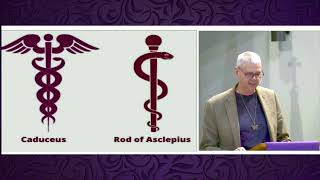
Family Life Minister Curtis proclaimed that God’s gracious will is for us to fear, love, and trust Him above all things, yet our sinful hearts, like hidden snakes in the grass, rebel and prefer darkness over truth. Drawing from Book of Numbers 21, he showed how Israel’s grumbling revealed hearts of unbelief, and how God responded not by removing judgment, but by providing salvation through the bronze serpent lifted on a pole, a visible reminder that healing comes from Him alone. Tracing the imagery through history, including the medical symbols associated with Hermes and Asclepius, he contrasted secular origin stories with the Scriptural witness, arguing that monotheism was not invented by man, as suggested in films like Exodus: Gods and Kings, but revealed by the one true God. Ultimately, the bronze serpent pointed forward to Christ, as declared in Gospel of John 3:14–16: just as the serpent was lifted up, so the Son of Man was lifted up on the cross. Salvation is not found in symbols, rituals, or even in our faith itself, but in Christ alone, who by grace saves sinners through faith, making us alive in Him and calling us to walk in truth and good works prepared beforehand.
3rd Wednesday in Lent (Series B)
Old Testament Reading: Zechariah 9:9-13
Epistle Reading: Hebrews 6:19-20; 7:1-3, 11-14
Gospel Reading: Mark 11:1-10
Family Life Minister Curtis reflects on Jesus’ triumphal entry into Jerusalem, emphasizing how the raising of Lazarus helped generate excitement among the crowds, a phenomenon he calls the “Lazarus effect.” News of Jesus raising Lazarus from the dead spread widely and drew people to see him as he entered the city. Riding on a colt fulfilled prophetic expectations and symbolized the humility of Israel’s kings, contrasting with the war horses of Roman rulers. While the crowds shouted “Hosanna,” hoping for a political deliverer who would overthrow Roman oppression, Jesus came for a different purpose. Rather than bringing earthly judgment or revolution, he came as the true King who would bring healing and forgiveness by taking the punishment for sin upon himself. The shouts of “Hosanna,” meaning “save us,” expressed both hope and longing for salvation. Ultimately, Jesus affirmed before Pilate that his kingship was real but that his kingdom was not of this world, pointing to a reign grounded in truth and salvation rather than earthly power.
3rd Sunday of Lent (Series B)

Old Testament Reading: Exodus 20:1-17
Epistle Reading: 1Corinthians 1:18-31
Gospel Reading: John 2:13-25
Rev Greg DeVore reflects on Jesus’ cleansing of the temple in John’s Gospel, the first of two such events in Christ’s ministry. By connecting this moment with the prophet Malachi’s critique of corrupted worship, he explains that God had long rejected empty sacrifices offered without sincere hearts. The temple marketplace, though created as a practical solution for providing acceptable animals and currency, ultimately corrupted sacred space, especially the Court of the Gentiles meant for prayer by all nations. Jesus’ dramatic cleansing of the temple reveals God’s deep concern for true worship and foreshadows a transformation in how humanity approaches God. Christ himself becomes the true temple, and his death and resurrection fulfill the sacrificial system once and for all. Rev DeVore concludes by acknowledging human struggles with distraction in worship but proclaims the gospel: Christ bore the punishment for our failures and makes our imperfect worship acceptable to God. Because of this grace, believers are called to approach worship with reverence and to cultivate lives of prayer and devotion beyond Sunday gatherings.
2nd Wednesday in Lent (Series B)
Old Testament Reading: Hosea 6:4-6
Epistle Reading: Hebrews 3:12-18
Gospel Reading: Matthew 12:1-8
Family Life Minister Curtis reflects on the Sabbath during Holy Week, the quiet day between the anointing at Bethany and the events that soon follow. Drawing on Martin Luther’s explanation of the Third Commandment, he explains that the Sabbath is not merely about avoiding work but about setting aside time to receive God’s Word and reflect on our relationship with Him. Throughout history, religious leaders often added strict rules to protect God’s commandments, sometimes misunderstanding the deeper message of faith and repentance proclaimed by the prophets. Jesus challenged such legalism, teaching that God desires mercy and faithfulness rather than mere ritual observance. The Sabbath, therefore, is meant as a gift for humanity, a time for rest, reflection, and worship. For Christians, Sunday worship commemorates the resurrection of Christ and reminds believers that true rest is found in Him. The sermon concludes by encouraging believers to treat worship not as habit or obligation but as an opportunity to receive God’s gifts and deepen their relationship with Him.
2nd Sunday of Lent (Series B)
Old Testament Reading: Genesis 17:1-7, 15-16
Epistle Reading: Romans 5:1-11
Gospel Reading: Mark 8:27-38
Rev David Schemm reflects on Mark 1:21-28, where Jesus teaches in the synagogue and casts out an impure spirit, demonstrating authority that even demons recognize. Using a story from his early ministry about the authority of a highway patrol officer, he illustrates how people respond differently when true authority is present. The sermon emphasizes that while Christians cherish Jesus’ promise of eternal life, they sometimes overlook his authority over every aspect of life. The disciples, after witnessing Jesus’ resurrection, did not simply celebrate their salvation but devoted their lives to following him boldly, even in the face of danger. The pastor encourages believers to surrender their whole lives to Christ’s authority and trust God’s guidance and purpose. Ultimately, the sermon returns to the heart of the Gospel: the same Jesus who holds authority over the world used that authority not to condemn humanity, but to save it through the cross and to invite believers to call God “Father,” assuring them of forgiveness, purpose, and eternal love.
1st Wednesday in Lent (Series B)
Old Testament Reading: Deuteronomy 15:7-11
Epistle Reading: Hebrews 10:19-25
Gospel Reading: John 12:1-11
Family Life Minister Curtis begins a midweek Lenten series tracing the final days of Jesus through Scripture, starting six days before Passover in Bethany. Bethany, the home of Mary, Martha, and Lazarus, was a place closely connected to several important events in Jesus’ ministry, including the raising of Lazarus and later the ascension. At a celebratory dinner following Lazarus’ resurrection, Mary humbly anoints Jesus with costly perfume, demonstrating deep devotion and love. Her act stands in sharp contrast to Judas Iscariot, whose focus on the value of the perfume reveals a heart more concerned with money than with Christ. The moment highlights a recurring theme in the Gospel of John: the contrast between faithfulness and faithlessness. Mary’s humility and worship point toward Jesus’ coming sacrifice, while Judas’ actions foreshadow betrayal. Ultimately, the story reminds believers that Scripture always points to Christ, who willingly submits to suffering and death for the salvation of the world.
1st Sunday of Lent (Series B)
Old Testament Reading: Genesis 22:1-18
Epistle Reading: James 1:12-18
Gospel Reading: Mark 1:9-15
Rev Greg DeVore reflects on Mark’s account of Jesus’ baptism and shows how the Gospel of Mark intentionally connects the beginning of Jesus’ ministry with its climax at the crucifixion. At Jesus’ baptism, the heavens are torn open, the Spirit descends like a dove, and the Father declares Jesus to be his beloved Son. At the cross, Mark echoes these same themes: the temple curtain is torn, a centurion declares Jesus the Son of God, and Jesus gives up his spirit. These parallels reveal that the baptism points forward to the saving work of the cross. Through Christ’s death, the barrier between God and humanity is removed, believers gain access to God through the blood of Christ, and the Holy Spirit is given to those who believe. Because Jesus is both the Son of God and the sacrificial Savior, his death has the power to redeem humanity from sin and the power of Satan. Through baptism and faith, believers receive forgiveness, the presence of the Holy Spirit, and the assurance that they belong to Christ and live under his kingdom.
Ash Wednesday(Series B)
Old Testament Reading: Joel 2:12-19
Epistle Reading: 2Corinthians 5:20b-6:10
Gospel Reading: Matthew 6:1-6, 16-21
Family Life Minister Curtis reflects on the meaning of Lent and Ash Wednesday, emphasizing repentance, renewal, and the grace of salvation through Jesus Christ. Drawing from Matthew 6 and other scriptures, he reminds listeners that Lent’s 40 days recall Christ’s time in the wilderness and prepare believers to reflect on the cross and resurrection. The ashes placed on believers’ foreheads symbolize human mortality and the reality of sin, reminding us that we are dust and will return to dust. Yet the message of the gospel shifts the focus from human failure to God’s saving work: salvation is not earned through works but is a gift of grace accomplished through Christ’s sacrifice. While the law reveals sin and calls for repentance, the gospel proclaims hope, declaring that through Christ believers are forgiven, restored, and lifted from dust and ashes. Lent therefore becomes a season not only of repentance but also of renewed trust in God’s mercy and the salvation already secured through Jesus.
Lent 2023
Good Friday(Series A)
7 Apr 2023
Maundy Thursday(Series A)
6 Apr 2023
Palm Sunday(Series A)
2 Apr 2023
5th Wednesday in Lent (Series A)
29 Mar 2023
5th Sunday of Lent (Series A)
26 Mar 2023
4th Wednesday in Lent (Series A)
22 Mar 2023
4th Sunday of Lent (Series A)
19 Mar 2023
3rd Wednesday in Lent (Series A)
15 Mar 2023
3rd Sunday of Lent (Series A)
12 Mar 2023

2nd Wednesday in Lent (Series A)
8 Mar 2023
2nd Sunday of Lent (Series A)
5 Mar 2023
1st Wednesday in Lent (Series A)
1 Mar 2023
1st Sunday of Lent (Series A)
26 Feb 2023
Ash Wednesday(Series A)
22 Feb 2023
Good Friday(Series A)
Old Testament Reading: Isaiah 52:13-53:12
Epistle Reading: Hebrews 4:14-16; 5:7-9
Gospel Reading: John 18:1-19:42 or John 19:17-30
Pastor Ray reflects on the meaning of Good Friday, acknowledging that while funerals and death bring grief and pain, Christians gather on this day not merely to mourn but to remember the saving work of Jesus Christ. Recounting the suffering and crucifixion of Jesus, the sermon emphasizes that the details of Christ’s death were foretold centuries earlier through Old Testament prophecies, particularly in Isaiah and the Psalms, and were perfectly fulfilled in the events of the crucifixion. Jesus endured rejection, suffering, and death not because of His own wrongdoing but to take upon Himself the sins of humanity. By dying on the cross, He bore the curse of sin and redeemed humanity, paying the full price for forgiveness. What once was an instrument of death and shame has become a symbol of victory and salvation. Through Christ’s sacrifice, believers receive forgiveness, peace with God, and the assurance that their sins are removed forever, making Good Friday truly “good” because of the redemption accomplished through Jesus’ finished work on the cross.
Maundy Thursday(Series A)
Old Testament Reading: Exodus 24:3-11
Epistle Reading: Hebrews 9:11-22
Gospel Reading: Matthew 26:17-30 or John 13:1-17, 31b-35
Pastor Ray reflects on the meaning of betrayal and forgiveness by focusing on the events surrounding the Last Supper. Using the famous painting of the Last Supper by Leonardo da Vinci as an illustration, he highlights the moment when Jesus reveals that one of His disciples will betray Him. Judas betrays Jesus for thirty pieces of silver, but the sermon emphasizes that believers should not simply condemn Judas, because all people have betrayed Christ through their sins, denying Him in thoughts, words, and actions. Satan continually tempts believers to compromise their faith, leading to guilt and despair similar to what Judas experienced. Yet the message of the Gospel offers hope: unlike Judas, who lost faith in forgiveness, believers are reminded through the example of Peter that Christ’s grace restores those who repent. Jesus faithfully fulfilled the will of the Father, giving His life on the cross to redeem humanity, not with silver or gold but with His precious blood. Through the means of grace, including the proclamation of forgiveness and the Lord’s Supper, believers receive assurance that their sins are forgiven and that Christ’s sacrifice is greater than any betrayal.
Palm Sunday(Series A)
Old Testament Reading: Revelation 7:9-10, 14-17
Epistle Reading: Philippians 2:5-11
Gospel Reading: John 12:12-19
Pastor Ray reflects on the meaning of Palm Sunday as both a remembrance of Christ’s past victory and a promise of the future victory believers will share in paradise. He explains how palm branches symbolized triumph and eternal hope in biblical times, even though Jesus’ entry into Jerusalem appeared to lead to defeat on Good Friday. Through the illustration of premature celebration and personal struggles with sin, he reminds listeners that human victories often feel temporary or lost. Yet Christ’s true victory was revealed in His resurrection, proving He conquered sin, death, and Satan once and for all. Therefore, Christians can live with confidence, knowing their final triumph is secure through Jesus, and they will one day join the heavenly multitude, waving palm branches in eternal celebration.
5th Wednesday in Lent (Series A)
Old Testament Reading: Jonah 3:1-4:4, 4:11
Epistle Reading: Romans 8:1-11
Gospel Reading: John 11:17-27, 38-53
Pastor Ray reflects on the story of Jonah to show that God’s love is “deep and wide,” extending even to those people we may consider enemies or unworthy of care. Using the familiar Vacation Bible School song as an illustration, he explains how human beings naturally draw circles that include only those who are like them, while God’s heart embraces all people. Jonah’s reluctance to preach to the brutal Assyrians mirrors the struggle Christians face when called to show mercy to difficult or despised individuals. Through the historical example of Pastor Henry Gehrke ministering to Nazi war criminals, the sermon demonstrates that Christ’s saving grace is meant for everyone. During Lent, believers are called to repent of narrow-hearted attitudes, receive God’s forgiveness, and become ambassadors of reconciliation, sharing the wide-reaching love of Christ with the world.
5th Sunday of Lent (Series A)
Old Testament Reading: Ezekiel 37:1-14
Epistle Reading: Romans 8:1-11
Gospel Reading: John 11:17-27, 38-53
Pastor Ray reflects on the raising of Lazarus to teach about trusting God’s timing, even when prayers seem unanswered and loss feels overwhelming. He explains that Jesus deliberately delayed going to Lazarus so that His power over death would be unmistakably revealed, leading many witnesses to faith. Through both biblical teaching and a personal story about his daughter’s death, Pastor Ray emphasizes that God can bring spiritual life and eternal hope even through tragedy. Because Jesus is “the resurrection and the life,” believers who face physical death can live with confidence in eternal life. The sermon also encourages Christians to prepare thoughtfully for their own funerals so that the gospel message of Christ’s victory over death can be clearly proclaimed to others.
4th Wednesday in Lent (Series A)
Old Testament Reading: Micah 7:18-20
Epistle Reading: Ephesians 5:8-14
Gospel Reading: John 9:1-7, 13-17, 34-39
Pastor Ray reflects on God’s steadfast love and forgiveness, beginning with a childhood story of accidentally burning down a barn and being forgiven by his father. Using passages from 1 John and Micah 7, he emphasizes that forgiveness of sins is humanity’s deepest need and that God deals decisively with sin through Christ. Scripture portrays this forgiveness in vivid ways: God tramples sin underfoot, casts it into the depths of the sea, removes it as far as east is from west, covers it through atonement, and even chooses to remember it no more. Because of Christ’s sacrifice, believers are freed from guilt and shame, reconciled to God, and called to forgive themselves and others in response to the mercy they have received.
4th Sunday of Lent (Series A)
Old Testament Reading: Isaiah 42:14-21
Epistle Reading: Ephesians 5:8-14
Gospel Reading: John 9:1-7, 13-17, 34-39
Pastor Ray reflects on the healing of the man born blind to illustrate the deeper reality of spiritual blindness and sight. Beginning with a childhood story of temporary physical blindness, he explains that all people are born spiritually blind because of sin and cannot recognize Jesus as Savior without divine intervention. In John’s Gospel, Jesus heals the blind man not as punishment for sin, but so that God’s work might be revealed. While religious leaders reject the miracle out of pride and unbelief, the healed man comes to faith and worships Jesus, demonstrating true spiritual sight. Through Christ, believers are also given “eyes of faith,” enabling them to understand forgiveness, eternal life, and God’s presence even in suffering. The sermon concludes by urging Christians to treasure their spiritual vision and share the light of faith with those still walking in darkness.
3rd Wednesday in Lent (Series A)
Old Testament Reading: Exodus 17:1-7
Epistle Reading: Romans 5:1-8
Gospel Reading: Luke 24:44-49
Pastor Ray continues the Lenten series on God’s love by focusing on the many ways God demonstrates His love through the forgiveness of sins. Drawing from Scripture and Jesus’ post-resurrection commission to proclaim repentance and forgiveness, he emphasizes that forgiveness is humanity’s greatest need because sin separates people from God and leaves them under judgment. God, however, lovingly provides forgiveness as a gift through Christ’s suffering, death, and resurrection. This forgiveness is not something believers must earn or search for, but is given through the Gospel proclamation, Holy Baptism, the Lord’s Supper, absolution, and the mutual forgiveness shared among Christians. The sermon concludes by affirming that God’s sacrificial love, shown most clearly at the cross, assures believers of reconciliation, eternal life, and the joy of being welcomed as God’s children.
3rd Sunday of Lent (Series A)
Old Testament Reading: Exodus 17:1-7
Epistle Reading: Romans 5:1-8
Gospel Reading: John 4:5-26
Rev Simon reflects on his years in ministry and shares that the three greatest needs people have are peace, strength, and hope, all of which are found in faith in Jesus Christ. Drawing from Romans 5, he explains that believers have peace with God because Christ died for sinners and reconciled them to the Father. This peace becomes the foundation for daily strength, enabling Christians to endure suffering and face life “one day at a time,” trusting that nothing can separate them from Christ’s love. Finally, Rev Simon illustrates the certainty of Christian hope through a hospital visit with a faithful church member who feared she might not go to heaven. By reminding her of Jesus’ promise in John 14, he helped her find confident assurance in eternal life. He concludes by encouraging believers to share this peace, strength, and hope with others, especially during the Lenten season.
2nd Wednesday in Lent (Series A)
Old Testament Reading: Genesis 12:1-9
Epistle Reading: 1 Peter 1:13-21
Gospel Reading: John 3:1-17
In this Lenten sermon, Pastor Ray explores how God reveals His love for humanity, using the concept of “love languages” to illustrate that God’s ultimate expression of love is the sacrifice of Jesus on the cross. While people may show love through words, service, gifts, time, or touch, God’s love is measured by the staggering cost He was willing to pay to redeem sinners — the precious blood of Christ. Reflecting on the cross as both a symbol of suffering and salvation, Pastor Ray emphasizes the perspectives of both God the Father, who gave His only Son, and Jesus, who willingly laid down His life. This sacrifice reveals both the depth of God’s love and the seriousness of human sin, showing that there was no other way for salvation. He concludes by encouraging believers to see the cross as God’s enduring “love language,” a constant reminder of how deeply they are loved.
2nd Sunday of Lent (Series A)
Old Testament Reading: Genesis 12:1-9
Epistle Reading: Romans 4:1-8, 13-17
Gospel Reading: John 3:1-17
In this Lenten sermon, Pastor Ray reflects on the nighttime encounter between Nicodemus and Jesus in John 3 to explain the difference between human religion and God’s saving grace. Though Nicodemus was a respected religious leader, he sensed something missing and sought Jesus in secret, only to be challenged with the need to be “born again” through water and the Spirit. Pastor Ray emphasizes that salvation cannot be earned through good works or religious status, but comes as a gift of faith in Christ, foreshadowed by the bronze serpent lifted up in the wilderness and fulfilled in Jesus being lifted up on the cross. Centering on John 3:16 as the “gospel in a nutshell,” he highlights God’s deep love in giving His Son for the world’s salvation and calls believers to live daily in repentance, faith, and the new life granted through baptism and grace.
1st Wednesday in Lent (Series A)
Old Testament Reading: Genesis 3:1-21
Epistle Reading: Romans 5:12-19
Gospel Reading: Matthew 6:25-34
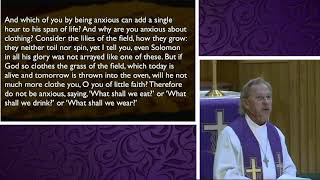
Pastor Ray reflects on Jesus’ teaching from the Sermon on the Mount about not worrying for tomorrow, emphasizing God’s faithful care for His children. Using Jesus’ images of birds and lilies, along with examples from everyday parenting, he illustrates how God lovingly provides for both physical and spiritual needs, even when life includes suffering and unanswered questions. Personal stories highlight moments of divine protection and the difficult trust required when facing fear or pain, ultimately pointing to the cross as the greatest sign of God’s love and provision. During Lent, believers are encouraged to trust their Heavenly Father, recognize His daily blessings, and allow His love and forgiveness in Christ to shape how they care for others.
1st Sunday of Lent (Series A)
Old Testament Reading: Genesis 3:1-21
Epistle Reading: Romans 5:12-19
Gospel Reading: Matthew 4:1-11
Pastor Ray uses the illustration of a youth “blind retreat” to emphasize the importance of listening to God’s voice amid the many competing voices in the world. Reflecting on the temptation of Adam and Eve and Jesus’ temptation in the wilderness, he highlights how the devil twists God’s Word to create doubt, desire, and disobedience. While Adam and Eve fell into sin and blame, Jesus resisted temptation by trusting and quoting Scripture, ultimately becoming the promised Savior who defeats sin, death, and the devil. Believers are therefore called to walk by faith rather than sight, tune out worldly distractions, remain grounded in God’s Word, and trust in Christ’s saving grace that opens blind eyes to spiritual truth.
Ash Wednesday(Series A)
Old Testament Reading: Joel 2:12-19
Epistle Reading: 2Corinthians 5:20b-6:10
Gospel Reading: Matthew 6:1-6, 16-21
On Ash Wednesday, Pastor Ray reflects on the sobering reality that humanity is formed from dust and will return to dust because of sin. Using the Genesis account of creation and the fall, he explains how Lent is both a season of repentance and a season centered on the depth of God’s love. While sin has brought suffering, death, and brokenness into God’s good creation, Christians are called not only to sorrow over sin but also to rejoice in the hope of salvation through Jesus Christ. Dust and ashes symbolize repentance and human frailty, yet they also point to the powerful love of a God who first breathed life into Adam and who promises to raise His people again to eternal life. Through Christ’s sacrifice on the cross, God reaches down into humanity’s dust and death to forgive sins, restore life, and offer the certainty of resurrection and eternal joy. The message encourages believers to enter Lent with humility, repentance, confidence in forgiveness, and renewed assurance that God’s love will ultimately overcome death.